
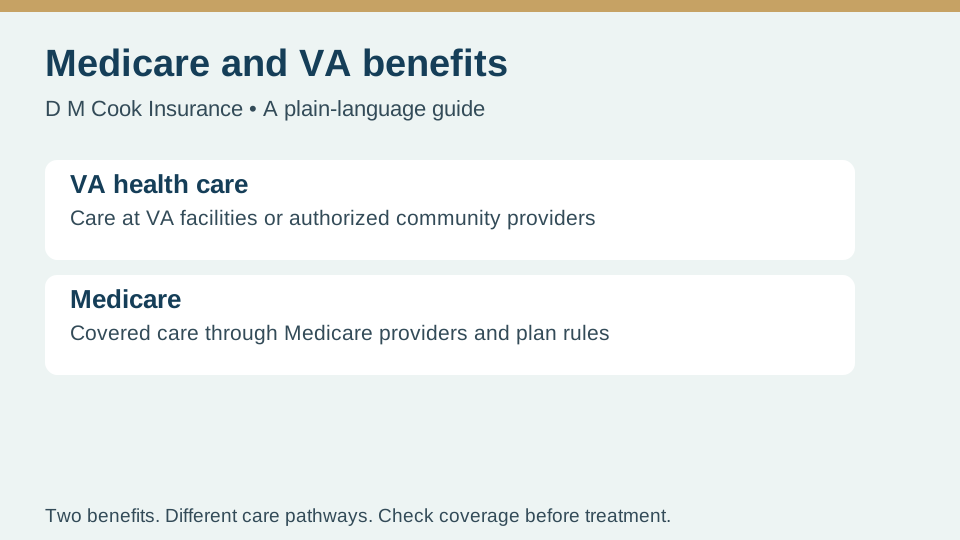
You can have Medicare and VA health care at the same time. For many veterans, that means more ways to get care. The important part is knowing which benefit applies to each appointment, prescription, or hospital stay. Having both does not mean every bill is covered twice, or that you can visit any civilian doctor and expect VA to pay.
Think about your own routine: where you see your primary doctor, how you fill prescriptions, whether you travel, and which specialists you want to keep. Those details matter more than a plan advertisement. This guide explains the main rules and the questions to ask before choosing coverage. It focuses on VA health care for veterans, with a separate section on CHAMPVA and TRICARE For Life for people who have those benefits.
1. Understand the Medicare parts
Medicare is federal health insurance, usually for people age 65 and older and for some younger people with qualifying disabilities or conditions. VA health care is a separate benefit with its own eligibility and care rules. Enrolling in one does not automatically enroll you in the other. Start with our Medicare guidance if you are sorting out your first coverage decisions.
Part A helps cover inpatient hospital care and certain other services. Part B helps cover doctor visits, outpatient care, medical equipment, and many preventive services. Together, A and B are Original Medicare. Part D is prescription drug coverage offered through private plans. Part C, or Medicare Advantage, is a private-plan alternative for receiving your Medicare benefits. Medicare explains the parts and coverage options.
Most people qualify for premium-free Part A, but Part B generally has a monthly premium. Coverage also has cost-sharing rules. Before choosing a plan, separate the monthly amount you pay to keep it from the amounts you could owe when you actually use it. A low premium alone does not tell you whether coverage fits your needs.
2. Know which benefit pays for your care
VA health care and Medicare generally do not pay for the same service. VA is not simply a second payer that picks up every Medicare deductible or copay. Medicare’s rules for veterans’ benefits explain that you choose which benefit to use for care, and Medicare and VA cannot pay for the same items or services.
A visit at a VA clinic follows VA rules. A civilian appointment under Original Medicare follows Medicare coverage and provider rules. If you use Medicare Advantage, the plan’s network, coverage, and approval rules apply. The building alone does not always settle the question: a community provider can also see veterans through an authorized VA referral. Ask the office how the appointment is being billed.
For example, a veteran might see a VA primary care doctor and use Medicare for a civilian specialist. Those are separate care arrangements. Keep each team informed about the other’s treatment, especially when medications change. Share recent test results when appropriate and ask who will manage follow-up care. Two sources of coverage work best when they support one clear care plan.
3. Do not treat VA coverage as a Part B exception
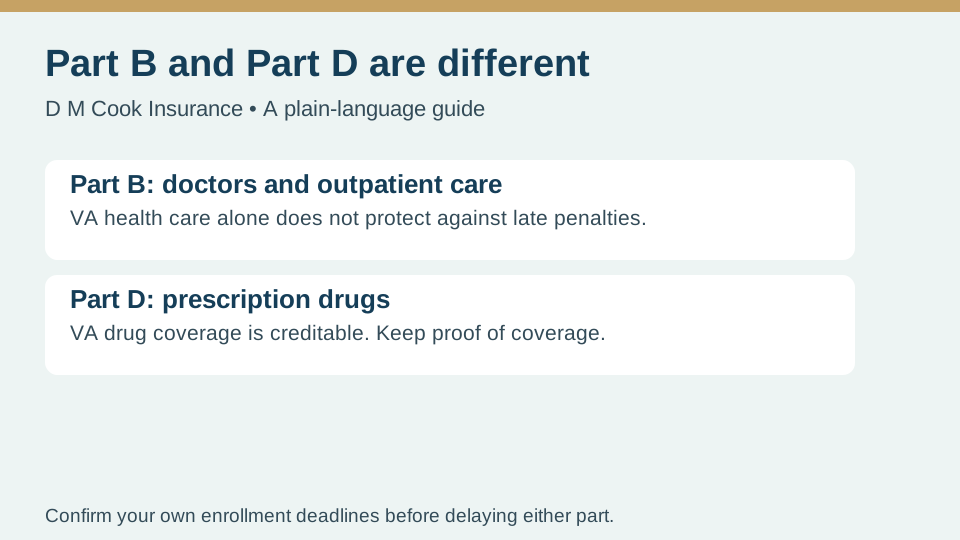
A common question is, “If I already use VA, can I skip Part B?” VA health care alone does not give you the employment-based Special Enrollment Period that can protect some people who delay Part B. If you delay without a qualifying exception, you may owe a late enrollment penalty and have to wait for an available enrollment period.
The VA’s guidance on Medicare and other insurance encourages veterans to enroll in Medicare when eligible. Medicare can provide access to non-VA care. VA also states that it does not bill Medicare or Medicaid. That is why having VA benefits should not be mistaken for having a Medicare Supplement policy.
Medicare’s late enrollment penalty rules generally add 10% to the standard Part B premium for each full 12-month period you could have had Part B but did not, unless an exception applies. The penalty usually continues for as long as you have Part B. This is a recurring cost, not a single enrollment fee.
If you or your spouse still work and you also have employer group coverage, have that separate coverage reviewed before deciding. The answer may depend on the employment arrangement and the plan. Ask Social Security to confirm your eligibility for a Special Enrollment Period. Do not rely on a friend’s situation, a VA disability rating, or the fact that you rarely use civilian care.
4. Check enrollment dates before you need outside care
For most people turning 65, the Initial Enrollment Period lasts seven months: the three months before the birthday month, that month, and the three months after. There are exceptions, including special timing for birthdays on the first day of a month. Use Medicare’s enrollment timing guide to check your circumstances.
Do not assume you are automatically enrolled. Look for your Medicare card and confirm which parts are active and when they start. If you need to apply, leave time to complete the process. Our Medicare enrollment guide for Georgia can help you prepare the questions to ask before your start date.
If you missed your first opportunity, the General Enrollment Period for Part A and Part B runs January 1 through March 31, with coverage generally starting the month after enrollment. Other Special Enrollment Periods may apply. The fall Medicare plan enrollment season is a different event. Do not assume changing plans in the fall also solves a missing Part B enrollment.
5. Decide whether Part D adds useful pharmacy access
VA prescription drug coverage is considered creditable for Medicare Part D. Creditable means the coverage is expected to pay, on average, at least as much as Medicare drug coverage. You can generally delay Part D without a late penalty while you keep creditable coverage. Keep documents showing when your VA drug coverage was active. Medicare’s creditable drug coverage guidance explains why those records matter.
That does not mean Part D is useless for every veteran. Think about how you get medicine today. Would a local pharmacy be helpful when a civilian doctor prescribes a drug? Do you travel often? Would you prefer another pharmacy option? Compare the actual medications and pharmacy costs before paying for another plan. Our Part D drug coverage guidance explains the details to review.
If you have both benefits, VA and Part D remain separate pharmacy arrangements. Ask which benefit the prescription will use and what you will owe. Do not assume a VA prescription can be filled anywhere under VA benefits, or that a Medicare plan covers every medicine. Check the exact drug, dose, quantity, pharmacy, and any approval requirements.
If creditable coverage ends, act promptly. Going 63 consecutive days or more without creditable drug coverage after your initial enrollment period can trigger a Part D late penalty. Enrollment windows and coverage start dates also matter, so do not treat 63 days as a safe waiting period. Arrange the next coverage before a gap occurs whenever possible, and answer any request from your new plan for proof of prior coverage.
6. Understand community care and emergency rules
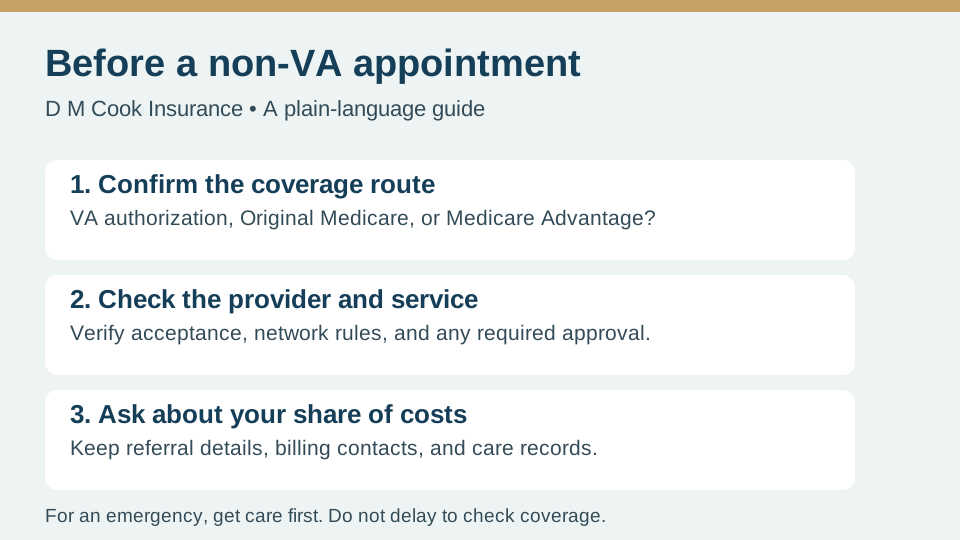
VA community care can allow eligible veterans to receive certain care from providers outside VA. It is not blanket permission to book any civilian appointment. VA’s community care overview explains that eligibility and authorization requirements apply. For planned treatment, confirm the referral, approved service, provider, and dates with your VA team before the appointment.
When booking, ask whether the office is scheduling you under the VA referral or your Medicare coverage. Keep a copy of the authorization details and ask whom to contact about billing. If the clinician recommends more treatment, check whether that treatment needs another authorization. Being approved for one visit should not be treated as approval for every service that might follow.
In a medical emergency, call 911 or go to the nearest emergency department. Do not delay treatment while checking benefits. VA’s non-VA emergency care guidance asks for notification within 72 hours after emergency care begins. Ask the provider to notify VA; you or someone acting for you can do so if needed. Coverage depends on additional eligibility and claim requirements. Notification alone does not guarantee payment.
Urgent care and emergency care have different rules. A routine office visit also follows a different pathway. Keep your coverage cards available and make sure a family member knows where to find them. After an unexpected hospital stay, follow up on discharge instructions and billing contacts while the details are still fresh.
7. Compare Medicare options around your civilian care
The next decision is how you want Medicare to work outside VA. With Original Medicare, provider acceptance is central. With Medicare Advantage, review the plan’s network and rules. With Original Medicare plus Medigap, review how the supplement handles Medicare cost-sharing. None of these choices turns your VA care into a single combined Medicare benefit.
A veteran who mainly uses VA may still want civilian coverage for travel, a preferred specialist, or an unexpected change in access. Another veteran may use civilian doctors regularly. Begin with that pattern of care instead of assuming all veterans need the same plan. List the providers you want to keep and ask each office about the specific coverage you are considering.
Our Medicare Advantage guide explains why networks, copays, and prior authorization deserve attention. Some plans are marketed to veterans, including plans without Part D coverage. “Designed for veterans” is not proof that a plan is endorsed by VA or that your civilian doctors participate. Check the current plan documents and costs for your county, including how any advertised premium reduction works.
If you prefer Original Medicare, a Medicare Supplement policy may help with covered Medicare cost-sharing. Medicare’s Medigap basics describes a six-month Medigap Open Enrollment Period starting when you are 65 or older and enrolled in Part B. Later purchases may involve health questions, higher costs, or denial unless protections apply. Medigap does not supplement Medicare Advantage. Review this timing even if you currently expect to use VA for most care.
8. Put the rules into everyday situations
You use VA for routine care but want a civilian specialist. First ask whether the appointment will use an authorized VA referral or Medicare. Under Medicare, check provider acceptance or your Advantage network, the covered service, and your share of costs. Do not assume VA will pick up a Medicare copay. Ask who will send the specialist’s findings back to your usual doctor.
You get all medicines from VA. You may decide to keep VA drug coverage without adding Part D for now. Keep proof of that coverage and review your pharmacy needs if your prescriptions, travel, or civilian care change. A decision that worked last year may deserve another look when a new specialist prescribes a medicine.
You want to cancel Part B because you have not used it. Consider the consequences before stopping coverage: access to civilian outpatient care, future enrollment timing, possible penalties, and eligibility for other coverage. Ask about the cost of keeping it and the cost of needing it later. If affordability is the problem, explore assistance rather than assuming cancellation is your only option.
9. Bring the right information to a coverage review
A useful review starts with your Medicare card, current plan documents, medication list, preferred civilian doctors, and pharmacy choices. Add a short description of your VA care: which services you use, how you receive prescriptions, and whether community care referrals are part of your routine. You do not need to share your entire medical history just to begin comparing options.
Write down upcoming needs as well as today’s needs. Are you expecting surgery, moving, spending months away from home, or helping a spouse choose coverage? These changes can affect the questions worth asking. For local plan discussions, our Georgia Medicare plan guide provides a starting point, and you can contact David Cook for a personal review.
Before agreeing to a plan, ask for a clear explanation of premiums, expected visit costs, provider access, prescriptions, and enrollment dates. Keep notes and the documents used to answer those questions. If you receive a bill you do not understand, identify which benefit was billed before paying or assuming the other program will cover it. Contact the provider and the relevant coverage administrator to resolve the specific claim.
CHAMPVA and TRICARE For Life follow different rules
Do not apply the VA health care rules above to every military-related benefit. CHAMPVA serves certain eligible spouses, dependents, and survivors. VA’s CHAMPVA eligibility guidance says Medicare-eligible beneficiaries must have Part A and Part B to get or keep CHAMPVA benefits. Confirm your own status with CHAMPVA before changing Medicare coverage.
TRICARE For Life is also separate from VA health care. For TRICARE-eligible people with Medicare Part A and Part B, it provides Medicare-wraparound coverage. In most cases in the United States, Medicare pays first and TRICARE then considers covered costs. You must pay Part B premiums. The official TRICARE For Life guide explains the arrangement and its limits. Overseas rules differ.
A household can have different benefits for each person. One spouse may be a veteran using VA, while the other has CHAMPVA or another form of coverage. Review each person’s enrollment requirements separately. The right advice begins with the exact program name, not simply “military insurance.”
How D M Cook Insurance can help
David Cook at D M Cook Insurance can help you compare Medicare choices against your civilian doctors, prescriptions, budget, and travel needs. Bring your VA coverage questions to the discussion so your Medicare decision reflects how you actually receive care. Medicare guidance is available at no charge.
For VA eligibility, community care authorization, or a VA claim decision, work directly with VA. For Medicare plan comparisons, request a conversation with David or call 404-992-8071. The goal is a clear view of your options and responsibilities before you make a change.
Frequently asked questions
Can I keep VA health care if I enroll in Medicare?
Yes. You can have both. Medicare enrollment does not by itself take away VA health care eligibility. Confirm which benefit you are using for each service and follow that program’s provider, authorization, and billing rules.
Will VA pay my Medicare deductibles and copays?
Do not assume it will. VA health care is not a Medicare Supplement policy, and VA and Medicare generally cannot pay for the same service. Check the coverage route and your expected costs before planned treatment.
Does VA coverage let me delay Part B without a penalty?
VA health care alone does not provide the employment-based protection for delaying Part B. A separate qualifying enrollment exception may apply to your circumstances. Have Social Security confirm your options before you delay or cancel coverage.
Do I need Part D if I use the VA pharmacy?
Not necessarily. VA prescription coverage is creditable, which generally protects you against Part D late penalties while you keep it. Part D may still be useful for civilian prescriptions and local pharmacy access. Compare your actual needs and keep proof of prior coverage.
Can I use any civilian doctor with VA benefits?
Not simply because you are enrolled in VA. Planned community care generally needs VA authorization and must follow the approved referral. A civilian visit billed under Medicare instead must meet Medicare or your Medicare Advantage plan’s rules.
Related posts

Medicare
Does Medicare Cover Dental? What to Know
Does Medicare cover dental? Learn what Original Medicare usually excludes, when limited coverage may apply, and how to compare dental benefits.
Read article
Medicare
When Is Medicare Annual Enrollment? Dates to Know
Medicare Open Enrollment runs October 15 through December 7. Learn what you can change, what to review, and which deadlines are different.
Read article
Medicare
Medicare Annual Notice of Change: What to Check
Your Medicare Annual Notice of Change shows what may change next year. Learn what to check before you decide to keep or change your plan.
Read article